
A Test That Failed Before It Was Graded
When European authorities boarded the Smyrtos — a vessel operating within Russia’s shadow oil fleet — the action was presented as a turning point in sanctions enforcement. The boarding demonstrated willingness to use maritime interdiction against the infrastructure Russia had constructed to evade the G7 oil price cap. It was supposed to signal that the English Channel was no longer a free corridor for sanctions evasion.
The Forwarder, a Russian-flagged tanker that departed Primorsk last week, entered the Channel on Wednesday evening. The deterrence window lasted days.
The Smyrtos Boarding and What It Was Supposed to Signal
The Smyrtos interdiction occurred within a specific political context. European governments, under domestic and allied pressure to demonstrate that sanctions were not purely performative, needed a visible enforcement action. The boarding generated headlines, diplomatic protests from Moscow, and a brief spike in shadow fleet insurance costs. It did not generate a legal framework that would allow authorities to consistently interdict, seize, or meaningfully penalize vessels operating on similar profiles.
That gap is not incidental. The shadow fleet’s entire operational logic is built around the absence of consistent enforcement architecture. Vessels are registered under flags of convenience in jurisdictions that do not participate in G7 sanctions regimes. Ownership is layered through shell companies across multiple legal jurisdictions. Cargo documentation is routinely falsified or omitted. The Smyrtos boarding worked because authorities had gathered sufficient intelligence on that specific vessel. The Forwarder’s transit works because the legal infrastructure required to board every vessel matching that profile does not exist.
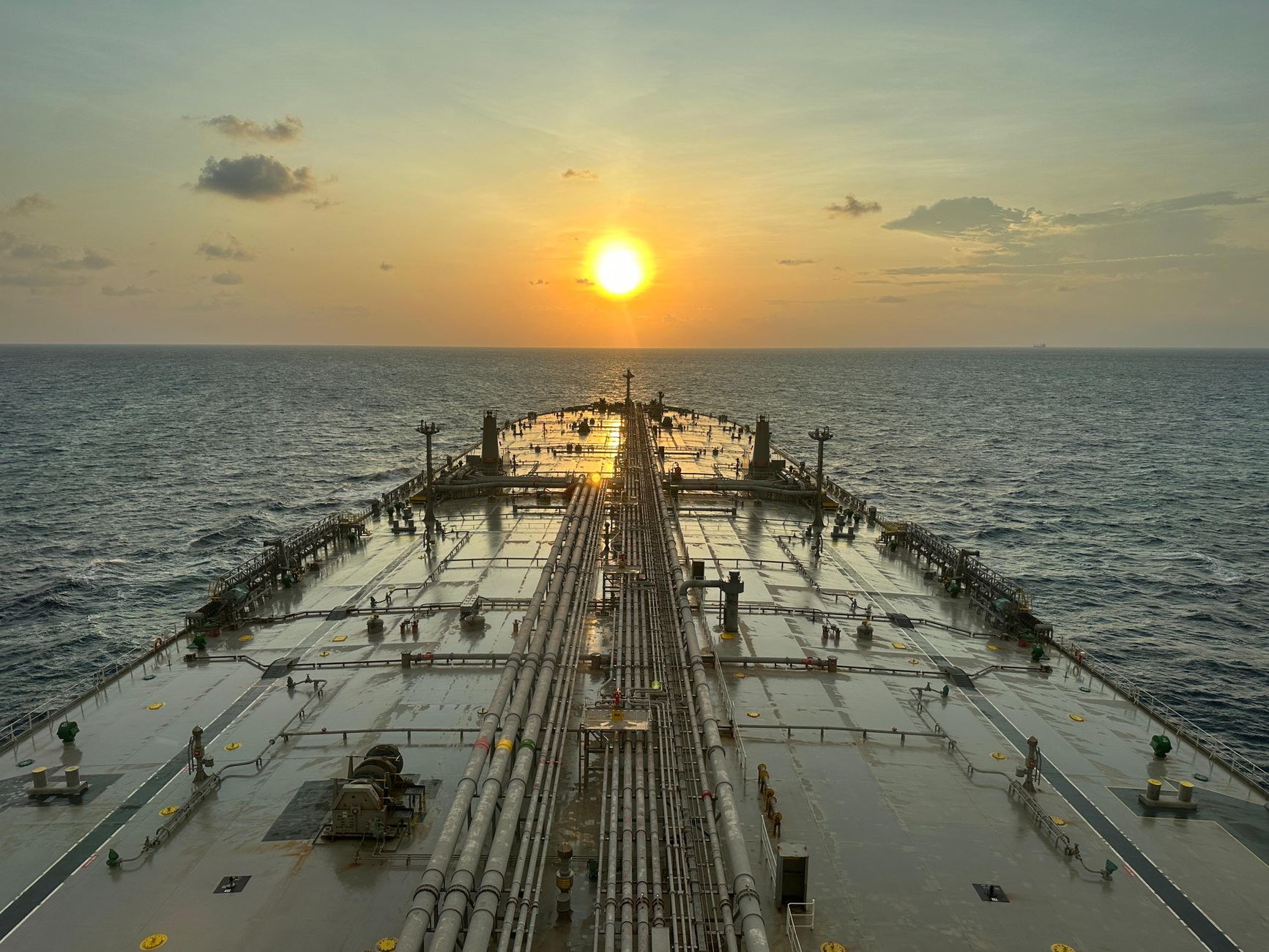
Shadow fleet tankers transit European waters with flags of convenience and opaque ownership chains specifically engineered to frustrate sanctions enforcement.
Punit Singh / PexelsWhat the Shadow Fleet Actually Is
Estimates of Russia’s shadow fleet — vessels specifically acquired or repurposed to move Russian oil outside the price cap mechanism — range above 700 ships. This is not a collection of rogue actors. It is a deliberately constructed parallel maritime economy, assembled after February 2022 with the direct involvement of Russian state entities, financed through mechanisms that route around SWIFT exclusions, and insured through Moscow-backed alternatives to Lloyd’s and other Western underwriters.
The fleet moves approximately 1.5 to 2 million barrels of Russian crude per day, enough to meaningfully offset the economic impact of Western sanctions on Russia’s energy revenue. The G7 price cap — set at $60 per barrel — was designed to allow Russian oil to continue flowing to global markets while capping the revenue Moscow could extract. Russia’s response was to build a fleet that simply does not use Western shipping services, Western insurance, or Western financial clearing, thereby making the price cap irrelevant to a large fraction of its exports.
The Enforcement Architecture That Doesn’t Exist
Interdicting shadow fleet vessels in European waters requires legal authority that most European states have not fully legislated. The power to board a foreign-flagged vessel in international waters or in a flag state’s territorial waters is governed by UNCLOS provisions that create significant procedural barriers. A vessel flagged in Palau, owned through a Emirati shell company, carrying cargo documented in Turkey, presents jurisdictional problems that a single boarding action does not resolve.
The United Kingdom, which controls the approaches to the English Channel from Dover, has expanded its sanctions enforcement powers since Brexit and has listed numerous shadow fleet vessels. Listing, however, is not interdiction. A listed vessel that transits the Channel without making port in a UK jurisdiction cannot be stopped without legal authorities that successive British governments have declined to fully assert, partly due to concerns about precedent in international maritime law and partly due to commercial pressure from shipping interests.
The Pattern Enforcement Creates
High-profile single interdictions without systematic legal architecture produce a specific and predictable outcome: a brief operational pause by shadow fleet operators, a recalibration of routing and documentation practices, and then a resumption. This is not speculation — it is the documented pattern from Baltic Sea interdictions, from previous Channel incidents, and from analogous enforcement campaigns against Iranian sanctions evasion infrastructure in the 2010s.
The Forwarder’s transit is not a failure of will. It is a structural outcome of using enforcement theater as a substitute for legislation. Until European states construct the legal architecture — standardized interdiction authority, coordinated flag state pressure, civil liability frameworks that pierce shell company ownership chains — shadow fleet operators have a rational basis for concluding that the risk of individual interdiction is manageable and the corridor remains open.
The Smyrtos boarding was an event. The Forwarder’s transit is a system.