
A Number That Obscures More Than It Reveals
The headline figure is $3.98 per gallon. The White House and its allies will treat this as vindication — the agreement signed between President Trump and Iranian President Masoud Pezeshkian works, and the pump price proves it. That framing is structurally dishonest. The correct comparison is not last week versus this week. It is now versus before the US-Israel attack on Iran that triggered the closure of the Strait of Hormuz in the first place. By that measure, American drivers are still paying more than a dollar extra per gallon. The war created the problem. The deal partially addresses the problem. The net effect on household purchasing power remains deeply negative.
The Strait as Leverage
The Strait of Hormuz is not a diplomatic abstraction. Approximately 21 percent of globally traded oil moves through a waterway 33 miles wide at its narrowest point. When Iran closed it — whether through direct action or the threat of action against tanker traffic — the global oil price did not gradually adjust. It spiked. US gasoline prices followed within weeks, because the refinery-to-pump pipeline is short and the futures markets are faster still. The closure was Iran’s most effective instrument of economic pressure precisely because it required no military engagement with the US Navy to be felt in Tulsa, Cincinnati, and Phoenix. The memorandum of understanding signed Wednesday restores passage. It does not retroactively compensate the households that absorbed the shock.
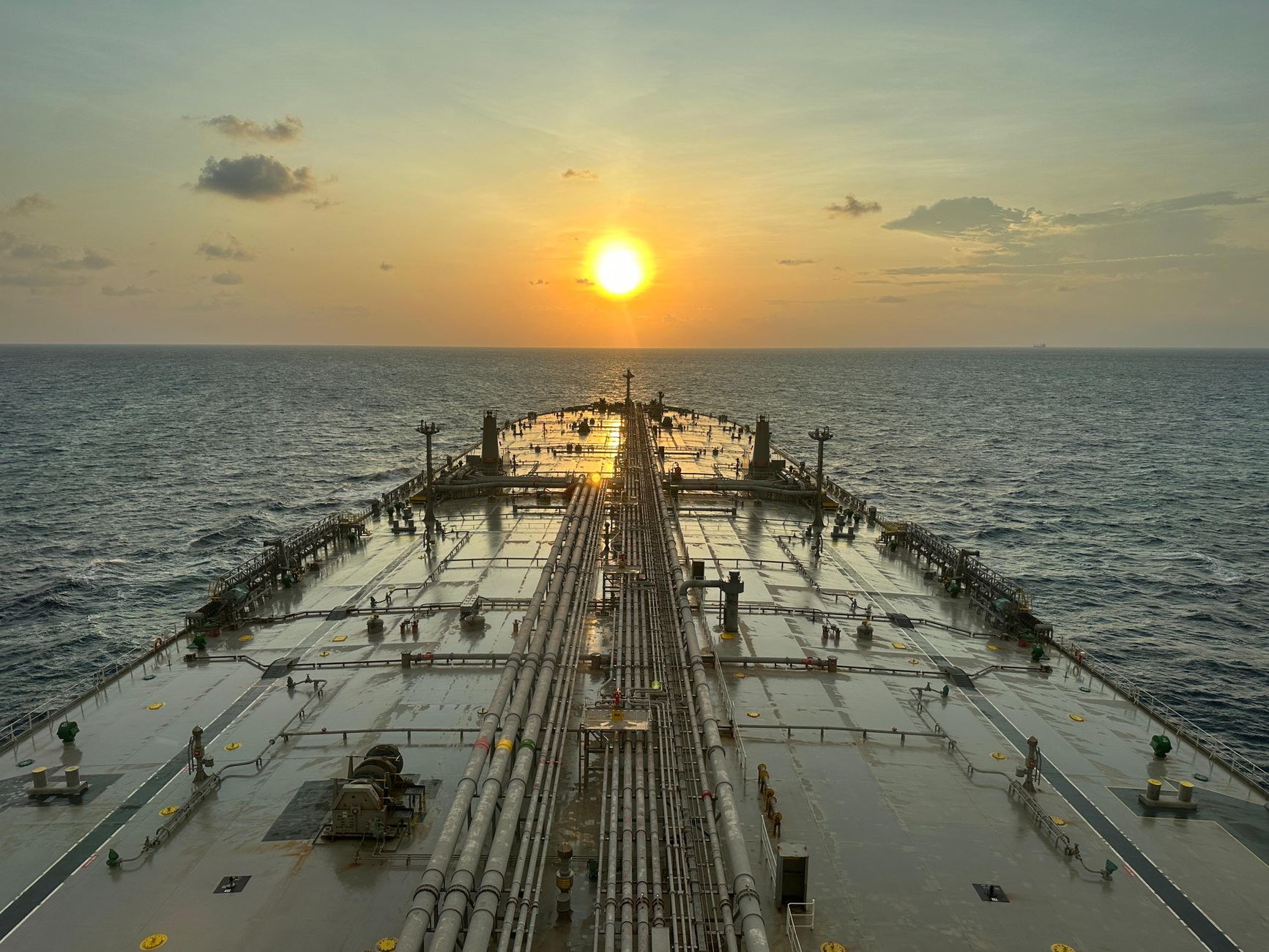
Roughly a fifth of globally traded oil transits the Strait of Hormuz — its closure during the US-Iran conflict transmitted directly into American pump prices within weeks.
Punit Singh / PexelsThe Arithmetic of Relief
From before the conflict through its peak, average US gasoline prices rose from roughly $3.00 to nearly $4.70 per gallon — a 57 percent increase sustained across the spring. The fall to $3.98 represents a reversal of approximately 38 percent of that increase. Significant in market terms. Insufficient in household terms. A driver filling a 15-gallon tank is still paying $15 more per fill-up than they were before the war began. Multiplied across 290 million registered vehicles and routine driving patterns, the aggregate wealth transfer from American consumers to oil producers and refiners over the conflict period runs into the hundreds of billions of dollars. That figure does not appear in the White House readout.
Average US Gasoline Price Per Gallon (2026)
What the MOU Actually Commits To
The full text of the memorandum of understanding, published by NPR, is a preliminary framework rather than a treaty. It commits both parties to ceasing active military operations, establishes a mechanism for reopening the strait to commercial traffic, and outlines a timeline for further negotiations on Iran’s nuclear program. Pakistan’s prime minister signed as a witness, signaling the extent to which Islamabad positioned itself as a back-channel throughout the conflict. What the document does not contain: verified timelines, enforcement mechanisms with teeth, or resolution of the underlying dispute over Iranian nuclear enrichment capacity. It is, structurally, a pause — and pauses in this region have a documented history of becoming the preconditions for the next escalation.
The Political Economy of the Announcement
The timing of the gas price story is not incidental. A price dropping below a psychologically significant round number — $4.00 — on the same news cycle as a peace announcement is a communications event as much as an economic one. The pump price is the single most visible economic data point in American political life, more viscerally understood by voters than GDP figures, inflation indices, or wage growth statistics. Administrations know this. The framing of the MOU as a deal that “brought gas prices down” collapses the distinction between ending a self-created crisis and generating a genuine economic gain. The war cost money. The deal stops the bleeding. These are not the same thing.
The Structural Lesson
What the Iran conflict demonstrated, at significant expense to American consumers and regional stability alike, is that the Strait of Hormuz remains the fulcrum of global energy pricing — and that any military posture in the Persian Gulf that does not account for Iranian capacity to threaten that chokepoint is strategically incomplete. The price at the pump recorded on Thursday is not a victory metric. It is a return to a baseline that was itself disrupted by policy choices. The gap between $3.98 and $3.00 is the permanent residue of a conflict whose costs have not been totaled, whose terms have not been finalized, and whose consequences for regional nuclear proliferation remain entirely unresolved.