The Grid Bottleneck That Created a Private Energy Market
The proximate cause of big tech’s clean energy investment surge is not altruism or climate commitment. It is bureaucratic constraint. Datacenter operators seeking to connect new facilities to existing electric grids have encountered interconnection queues that stretch three to five years in many US regions. The backlog is structural: transmission infrastructure has not kept pace with generation additions, and grid operators manage connection requests through a sequential study process that creates compounding delays when large loads are introduced.
Faced with that bottleneck, the largest technology companies — Microsoft, Google, Amazon, Meta — pivoted to a different model. Rather than waiting for grid connection approvals, they began financing their own generation capacity: long-term power purchase agreements with wind and solar developers, direct investment in nuclear restart projects, and co-located generation facilities that bypass the interconnection queue entirely. The capital volumes involved are large enough to move markets. Clean energy developers who were struggling to finance projects at commercial rates suddenly had anchor customers with 20-year off-take commitments and balance sheets that made utility-scale banks look constrained.
The Capital Injection Clean Energy Needed
The US clean energy industry entered the AI boom in a structurally weakened state. Federal incentives from the Inflation Reduction Act had catalyzed a pipeline of projects, but supply chain bottlenecks, rising interest rates, and permitting delays had slowed actual deployment. Many developers were sitting on approved projects they could not finance at viable returns. Big tech’s emergence as a direct buyer of generation capacity changed that calculation overnight.
The mechanism is relatively straightforward. A hyperscaler signs a 15-to-20-year power purchase agreement with a wind or solar developer at a fixed price above the market spot rate. That contract, backed by a corporate counterparty with a AAA-adjacent credit rating, allows the developer to secure project financing at rates unavailable in the merchant power market. Projects that were stranded in development hell become financeable. The datacenter gets a power supply that doesn’t depend on grid approval timelines. The developer gets its project built. The clean energy industry gets a demand signal large enough to justify manufacturing scale-up in solar panels, wind turbines, and grid-scale battery storage.

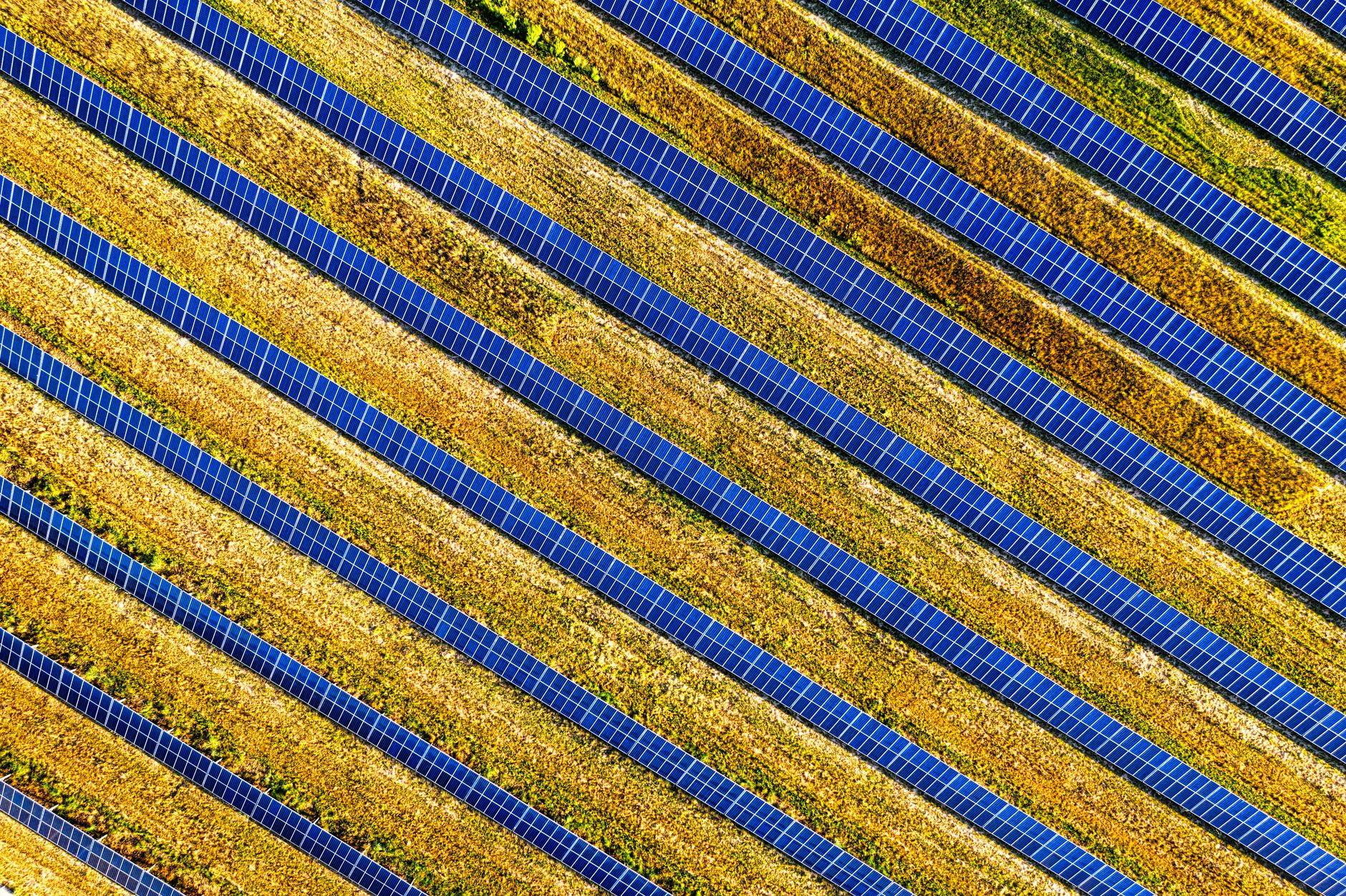
Tech companies blocked from immediate grid connections are financing their own power generation, injecting capital into wind, solar, and storage projects that utilities could not fund alone.
panumas nikhomkhai / PexelsDemand Outpacing Decarbonization
The problem with the narrative of tech companies saving clean energy is one of net arithmetic. Every megawatt-hour of clean energy a datacenter finances and consumes is a megawatt-hour that does not displace a fossil fuel generator on the broader grid. The additionality question — whether tech investment is creating genuinely new clean capacity or redirecting capacity that would have been built regardless — is empirically unresolved. But even granting full additionality, the scale of demand growth created by AI compute requirements is outpacing the clean energy capacity being financed to serve it.
Current estimates place US datacenter electricity consumption at roughly 8 percent of total national demand, a figure that has roughly doubled since 2020 and is projected to reach 12 to 15 percent by 2030 under median AI growth scenarios. The clean energy capacity being commissioned cannot absorb that growth entirely. The difference is made up by whatever is available on the grid at the moment of consumption — which, in most US regional markets, still includes significant natural gas peaking capacity that runs precisely when renewable intermittency creates supply gaps. A datacenter running on a 100 percent renewable power purchase agreement is not, in physical electrons, running on 100 percent renewable power.
US Datacenter Electricity Demand (TWh, projected)
Water, Land, and the Costs That Don’t Appear in Energy Accounting
Electricity demand is the most visible environmental pressure from the datacenter expansion, but not the only one. Cooling infrastructure for large facilities consumes water at rates that create local resource conflicts in drought-prone regions of the American Southwest and Southeast. A single hyperscale datacenter can consume millions of gallons of water daily during peak operational periods. As these facilities cluster in regions with favorable power costs and land availability, the cumulative water draw intersects with existing agricultural and municipal supply constraints.
Land use pressure follows the same geography. Utility-scale solar and wind installations, while occupying far more land per megawatt than conventional generation, are now being sited in direct competition with agricultural land and wildlife habitat in states that previously had limited industrial development pressure. The clean energy expansion financed by tech capital is not occurring in a spatial vacuum.
The Policy Gap Nobody Is Closing
The federal government does not currently have a coherent policy framework for managing the intersection of AI infrastructure growth, grid capacity, and decarbonization targets. The Inflation Reduction Act incentivizes clean energy production. FERC manages interconnection queues through a reform process that remains years from resolution. The Energy Department tracks demand projections. None of these authorities are operating from a unified model of what the grid needs to look like in 2030 to accommodate AI growth without reversing emissions progress.
The clean energy sector has a powerful new customer. The climate has a new and significant source of demand pressure. The two facts coexist without canceling each other out, and the policy architecture for managing that coexistence has not been built.