The Number and Its Source
The Gaza Health Ministry has recorded 1,005 Palestinian deaths since the ceasefire agreement between Israel and Hamas was reached last October. The figure comes from a health authority operating under siege conditions, with constrained capacity to document all casualties. The number is a floor, not a ceiling.
NPR and Al Jazeera both independently reported the figure on June 18, 2026. No Israeli government statement has contested it directly. The deaths occurred during a period designated, under US diplomatic framing, as a ceasefire.
The Ceasefire as Legal Category
The agreement reached in October 2025 was brokered by the United States, with Qatar and Egypt as mediating parties. Its terms established a pause in major hostilities, provisions for hostage releases, and frameworks for humanitarian access. What it did not establish — or did not establish with enforceable precision — was a prohibition on Israeli military operations defined as targeting militant infrastructure.
That definitional gap is the mechanism through which more than a thousand deaths have accumulated while the ceasefire’s nominal status has remained intact. Israel has characterized its continued operations as responses to Hamas violations or as counter-terrorism actions outside the ceasefire’s scope. The United States has not formally declared the ceasefire broken. Both positions are mutually sustaining: if the United States does not declare a violation, Israel has no diplomatic cost to absorb; if Israel maintains operational cover through targeted-strike framing, the United States can avoid the political consequences of acknowledging collapse.

International bodies have struggled to formally classify Israeli operations in Gaza as ceasefire violations under the terms of the October 2025 US-brokered agreement.
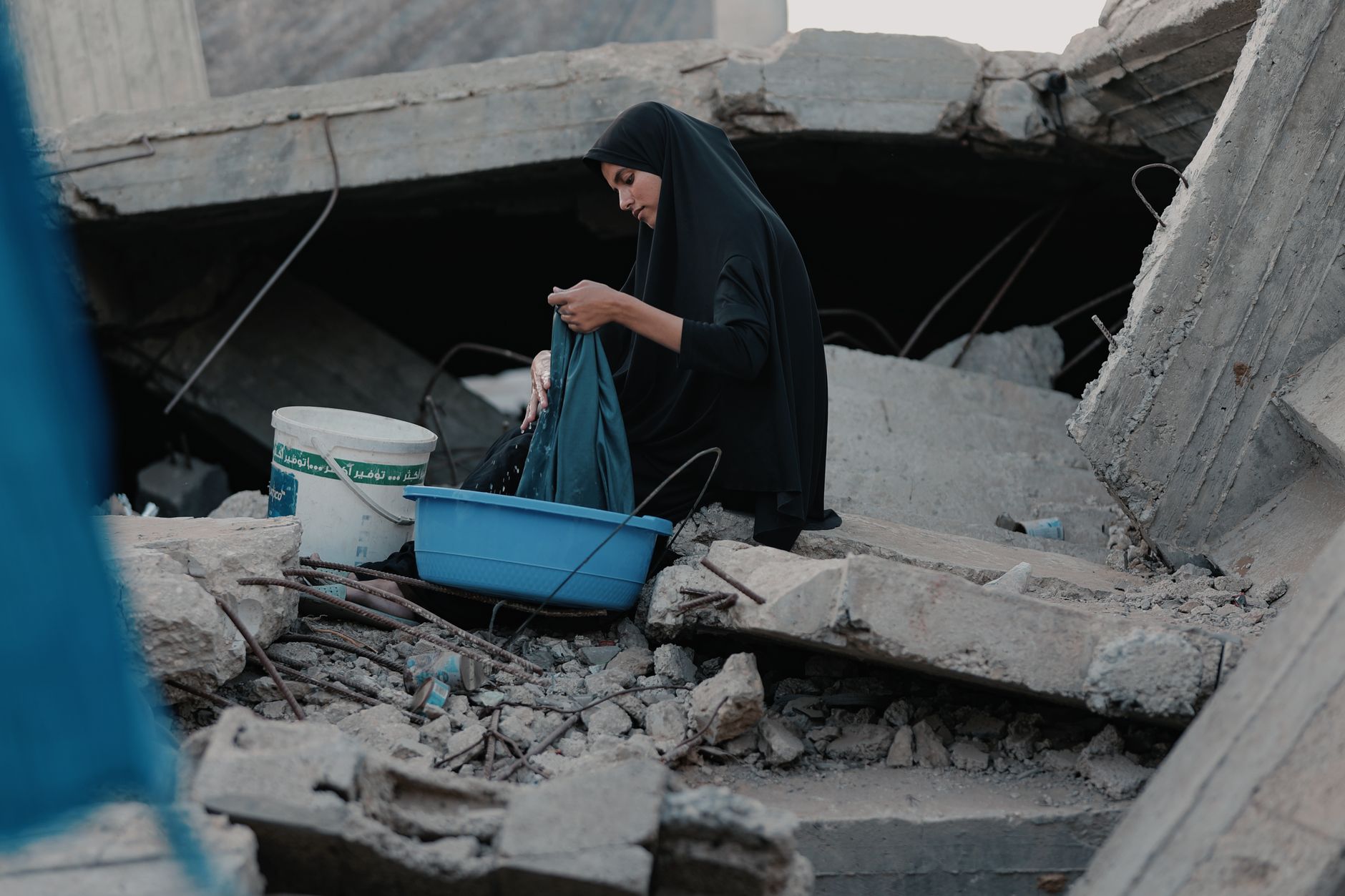
Hugo Magalhaes / PexelsThe Rate of Killing
One thousand deaths over eight months produces an average of roughly 125 per month, or approximately four per day. That rate is not uniform. The acceleration of deaths in later months suggests either an intensification of Israeli operations, a deterioration of civilian protection infrastructure, or both. The Gaza Health Ministry’s capacity to record deaths has itself been degraded by the conflict — medical facilities have been repeatedly struck, staff killed, supply chains severed.
The deaths include combatants, civilians, and individuals the Health Ministry has not been able to categorize. The distinction between combatant and civilian in a densely populated, infrastructure-collapsed urban environment is, in practice, a legal argument conducted far from the site of the killing.
Cumulative Palestinian Deaths During Gaza Ceasefire Period
Washington’s Position
The United States brokered the ceasefire. The United States has not invoked any enforcement mechanism in response to the accumulated death toll. This is not an oversight — it is a policy position expressed through inaction. The Trump administration, simultaneously engaged in negotiating a framework agreement with Iran that partially addresses the broader regional architecture, has a structural interest in not characterizing the Gaza situation as a ceasefire failure. A formal violation finding would require a response. A response would complicate the Iran negotiations. The Iran negotiations are the administration’s primary diplomatic asset in the region.
The Gaza deaths are therefore managed as background data rather than as a trigger condition. This management is functional, not accidental.
Israel’s Operational Logic
Israel’s continued military operations in Gaza during the ceasefire period reflect a consistent strategic position: that the elimination of Hamas’s military capacity is a precondition for any durable settlement, and that a ceasefire which leaves Hamas structurally intact is a temporary pause rather than a terminal condition. The operations are not conducted in defiance of the ceasefire’s existence — they are conducted within a reading of its terms that preserves Israeli operational discretion.
That reading has been accepted, functionally, by the parties in a position to contest it. The United States has not contested it. Egypt and Qatar have not successfully imposed a different interpretation. The international legal community’s characterization of the situation carries no enforcement mechanism.
Structural Impunity and the Accounting Problem
The 1,005 figure will continue to grow. The ceasefire framework contains no provision that makes 1,006 deaths more consequential than 1,005. There is no threshold number at which the agreement’s nominal status is automatically revised, no automatic referral mechanism, no standing international body with both the jurisdiction and the political backing to compel a different outcome.
The deaths accumulate inside a diplomatic structure designed to persist regardless of what occurs within it. That structure does not fail when people die inside it. It fails only when the parties maintaining it decide that its costs exceed its utility. For the parties currently maintaining it, that calculation has not changed. The ceasefire’s integrity as a diplomatic object is valued more highly, by those with the power to enforce it, than the lives documented beneath its designation.